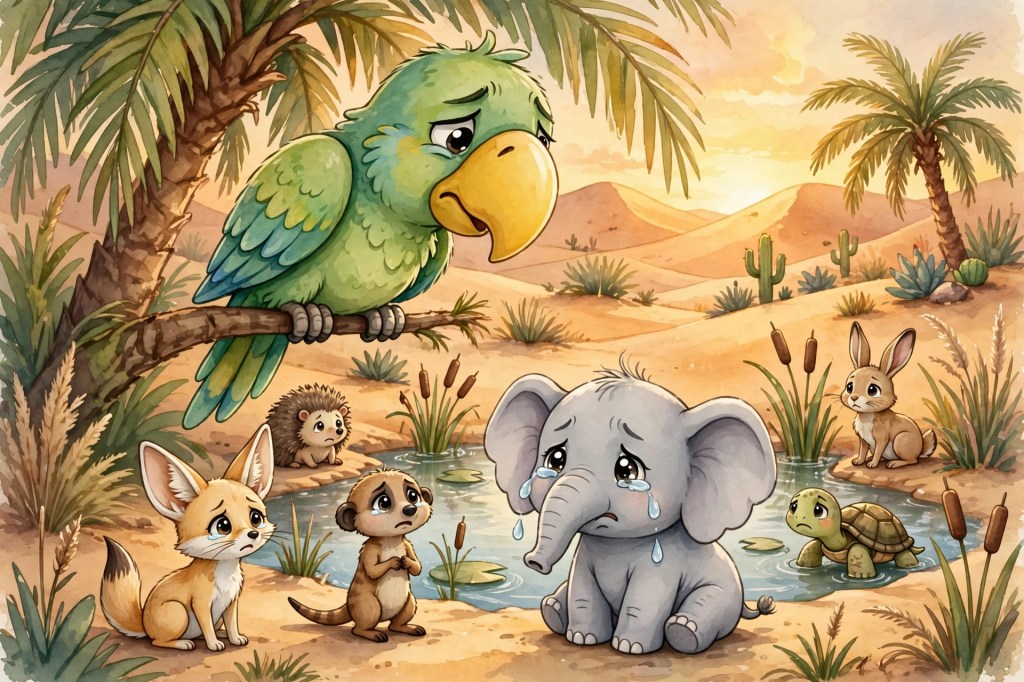
كان بيكو ببغاء، وكان بيكو يحب الكلام! كان يكرر كل ما يسمع — الرياح، والضفادع، وحتى شخير السلحفاة العجوز. “بيكو سمعها، بيكو يقولها!” كانت جملته المفضلة.
كل صباح، تجتمع الحيوانات لتسمع أخبار بيكو. “بيكو سمع أن النحل وجد أزهارًا جديدة!” يصيح. “بيكو سمع أن ريكو يستطيع القفز فوق ثلاث صخور!” (بونغ-بونغ! صحيح.)
في أحد الأيام الحارة، جلس بيكو على النخلة فوق البركة. وفي الأسفل، كانت السلحفاة العجوز تتحدث إلى الفيلة الصغيرة إيلا. كانت إيلا قد حملت وعاء ماء السلحفاة طوال الطريق من النبع. “شكرًا لك يا إيلا،” قالت السلحفاة ببطء. “لقد أعدتِ وعائي.”
لكن بيكو كان مشغولًا يحك جناحه. سمع نصف الكلام فقط. “أعادت وعائي”؟ أم “كسرت وعائي”؟ همم.
نفخ بيكو صدره. الخبر خبر! “بيكو سمعها، بيكو يقولها!” صاح وهو يطير حول الواحة. “إيلا كسرت وعاء السلحفاة!”
انتشرت الهمس أسرع من ساقي ريكو. “إيلا كسرت الوعاء؟” قالت الأرنبة. “إيلا كسرت الوعاء؟” قال الثعلب. امتلأت عينا إيلا بالدموع. “لم أفعل! لقد أعدته! حملته طوال الطريق!”
لكن أحدًا لم يكن يستمع إلى إيلا. كان الجميع يستمعون إلى بيكو.
في ذلك المساء، رأى بيكو إيلا جالسة وحدها تحت النخلة، تبكي دموعًا فيلية كبيرة. وشعر بيكو بشيء ضيق في صدره. كأنه ابتلع نواة تمرة.
طار بيكو إلى السلحفاة العجوز. “يا سلحفاة،” قال بهدوء، “ماذا قلتِ حقًا اليوم؟”
رمشت السلحفاة بعينيها العجوزتين البطيئتين. “قلت: إيلا أعادت وعائي. إنها فيلة صغيرة طيبة.”
سخنت ريشات بيكو خجلًا. لقد قال شيئًا خاطئًا. وشيئه الخاطئ جرح صديقته.
ففعل بيكو شيئًا أصعب من نشر الأخبار. طار حول الواحة كلها — بصوت أعلى من قبل — وصاح: “بيكو أخطأ! إيلا لم تكسر الوعاء! إيلا أعادت الوعاء! بيكو آسف!”
استمعت الحيوانات. مسحت إيلا دموعها… وابتسمت.
ومنذ ذلك اليوم، صارت لبيكو جملة مفضلة جديدة: “بيكو لا يقول إلا ما رآه حقًا!”
العبرة: الصدق يعني أن تقول الحقيقة فقط — وعندما تخطئ، صحح خطأك بصوت عالٍ.
لنتحدث: ماذا يجب أن تفعل إذا قلت شيئًا غير صحيح؟
Pico was a parrot, and Pico LOVED to talk. He repeated everything he heard — the wind, the frogs, even the old tortoise’s snores. “Pico heard it, Pico says it!” was his favorite sentence.
Every morning, the animals gathered to hear Pico’s news. “Pico heard the bees found new flowers!” he’d squawk. “Pico heard Riko can jump over three rocks!” (Boing-boing! True.)
One hot afternoon, Pico sat in the palm tree above the pond. Below, the old tortoise was talking to Ella the little elephant. Ella had carried the tortoise’s water bowl all the way from the spring. “Thank you, Ella,” said the tortoise slowly. “You brought my bowl back.”
But Pico was busy scratching his wing. He only half-heard. “BROUGHT my bowl back”? Or “BROKE my bowl”? Hmm.
Pico puffed up his chest. News was news! “Pico heard it, Pico says it!” he squawked, flying around the oasis. “Ella BROKE the tortoise’s bowl!”
The whisper ran faster than Riko’s legs. “Ella broke the bowl?” said the bunny. “Ella broke the bowl?” said the fox. Ella’s eyes filled with tears. “I didn’t! I brought it back! I carried it all the way!”
But nobody was listening to Ella. They were all listening to Pico.
That evening, Pico saw Ella sitting alone under the palm tree, crying big elephant tears. And Pico’s chest felt… tight. Like he’d swallowed a date pit.
Pico flew to the old tortoise. “Tortoise,” he said quietly, “what did you really say today?”
The tortoise blinked his slow, old eyes. “I said: Ella BROUGHT my bowl back. She is a kind little elephant.”
Pico’s feathers went hot with shame. He had said the wrong thing. And his wrong thing had hurt his friend.
So Pico did something harder than spreading news. He flew all around the oasis — louder than before — and squawked: “Pico got it WRONG! Ella did NOT break the bowl! Ella BROUGHT the bowl back! Pico is sorry!”
The animals listened. Ella wiped her tears… and smiled.
From that day on, Pico had a new favorite sentence: “Pico only says what Pico truly saw!”
The lesson: Honesty means saying only what is true — and when you get it wrong, fix it out loud.
Talk about it: What should you do if you say something that isn’t true?


Leave a Reply